
The Authors’ Club is delighted to announce the shortlist for the 2026 Best First Novel Award, now in its 72nd year.
Lucy Popescu, chairing the judging panel, commented: “We are delighted to announce our shortlist of six thrilling debuts. These talented novelists explore diverse themes including hidden lives, obsession and desire, displacement and survival, belonging and identity, rural life, masculinity, love and loss. Alongside these affecting inner journeys, the books travel through landscapes as varied as north Wales, Oxford, London, Scotland’s northern shores and former Zaire. These vivid, finely crafted novels are memorable for their strong storytelling and emotional depth.”
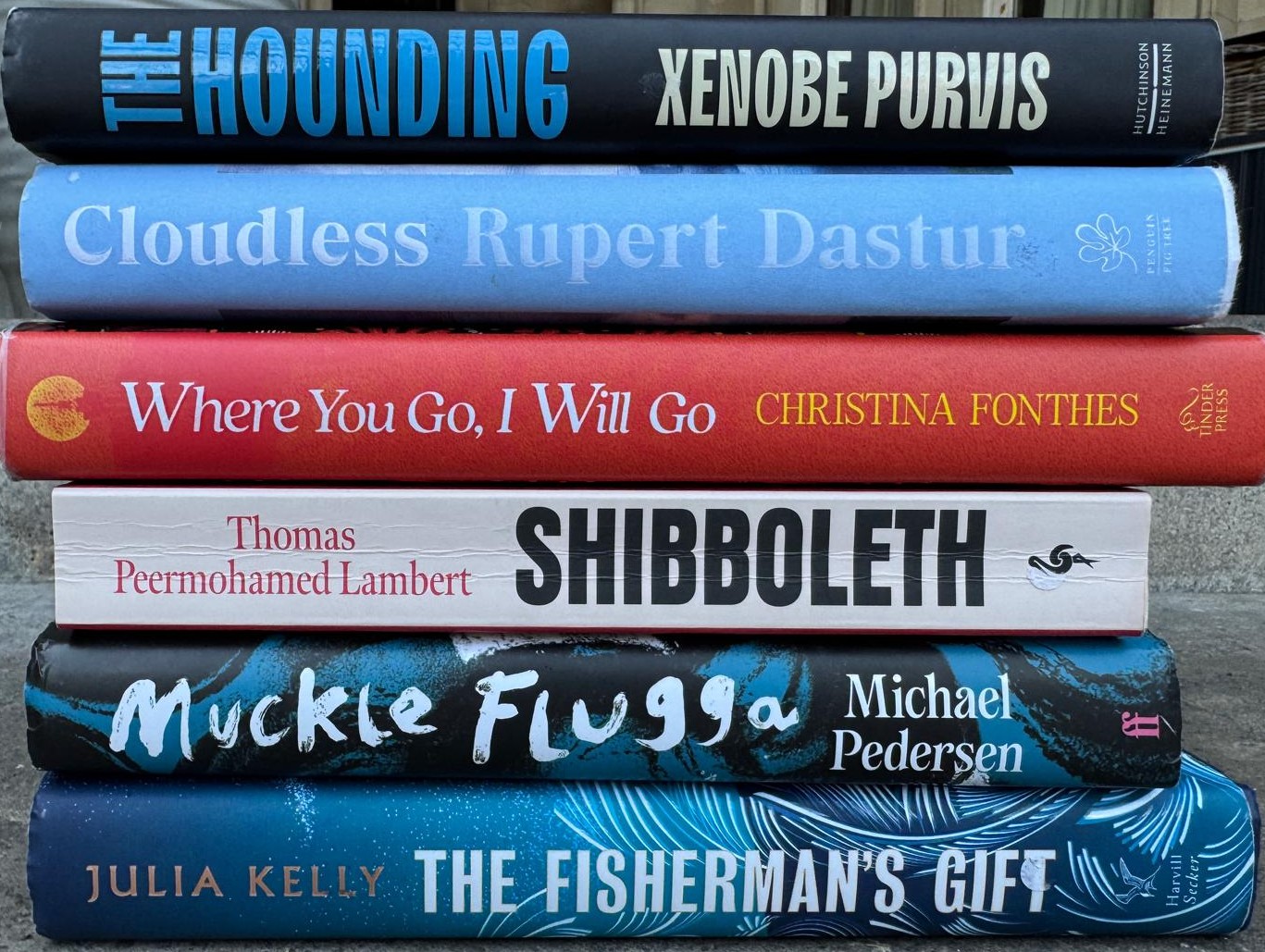
The winning novel will be selected by this year’s guest adjudicator, the biographer, historian, and journalist Anne Sebba, and announced at a dinner at the National Liberal Club in London on 20 May. The shortlisted books, with the judges’ comments, are as follows:
Cloudless by Rupert Dastur (Fig Tree)
A detailed, atmospheric and layered novel set in the hills outside Llandudno. Dastur displays immense compassion for his flawed yet deeply human characters as their powerlessness in the face of war unfolds.
Where You Go, I Will Go by Christina Fonthes (Tinder Press)
Fonthes navigates love, religion, misogyny, homophobia and the enduring impact of trauma in her captivating and tender debut. The novel is deftly plotted, gathering tension as it moves towards its dramatic denouement.
The Fisherman’s Gift by Julia Kelly (Harvill Secker)
Set in 1900 in an isolated Scottish fishing village, this bittersweet story explores grief and loss, and the power of love and redemption. The tensions and fierce emotions of a small community are eloquently captured.
Muckle Flugga by Michael Pedersen (Faber)
Pedersen conjures a world of rare beauty; an island divorced from modern life and its effects on its two long-term inhabitants. Linguistically dexterous, this is an extraordinary poetic imagining of life in a remote wilderness.
Shibboleth by Thomas Peermohamed Lambert (Europa Editions)
Set in a modern, multicultural and multinational Oxford college, this topical campus novel is a glorious satire of contemporary student politics, prevailing values, and the weaponising of individual identity.
The Hounding by Xenobe Purvis (Hutchinson Heinemann)
A taut, immersive tale of misogyny and superstition in a rural 18th century Oxfordshire community centred on the persecution of five wayward sisters. Purvis’s characterisation, narrative drive, and powers of description are superb.
Key dates
Thurs 30 April: Meet the shortlisted writers at the National Liberal Club, London, SW1A 2HE
Weds 20 May: The winner will be announced at a dinner at the National Liberal Club
About the prize
The award is open to any debut novel written in English and published in the UK between 1 Jan and 31 Dec 2025. The prize of £2500 exists to support UK-based authors, publishers and agents, so the novel must originate in the UK and not have been published anywhere else in the world before its UK publication.
Inaugurated in 1954, the Authors’ Club Best First Novel Award is now in its 72nd year, making it the longest-running UK prize for debut fiction and – except for the James Tait Black and the Hawthornden – the oldest literary prize in Britain.
Past winners have included Brian Moore, Alan Sillitoe, Paul Bailey, Gilbert Adair, Nadeem Aslam, Diran Adebayo, Jackie Kay, Susan Fletcher, Laura Beatty, Anthony Quinn, Kevin Barry, Ros Barber, Hisayo Rowan Buchanan, Gail Honeyman, Guy Gunaratne, Claire Adam, Ingrid Persaud, Tish Delaney, Ayanna Lloyd Banwo and Viktoria Lloyd-Barlow. Last year’s prize was awarded to Ferdia Lennon.
Past adjudicators have included Tracy Chevalier, Samira Ahmed, Louisa Young, Alex Wheatle, Andrew Miller, Louise Doughty, AL Kennedy, Vikram Seth, Philip Hensher, Joanne Harris, Deborah Moggach and, going back further, Kingsley Amis and Compton Mackenzie.
About The Authors’ Club
Established by Walter Besant in 1891, the Club has provided a social meeting place for writers for 135 years.
Contact: lucyjpop@gmail.com