
Words by Chris Schuler
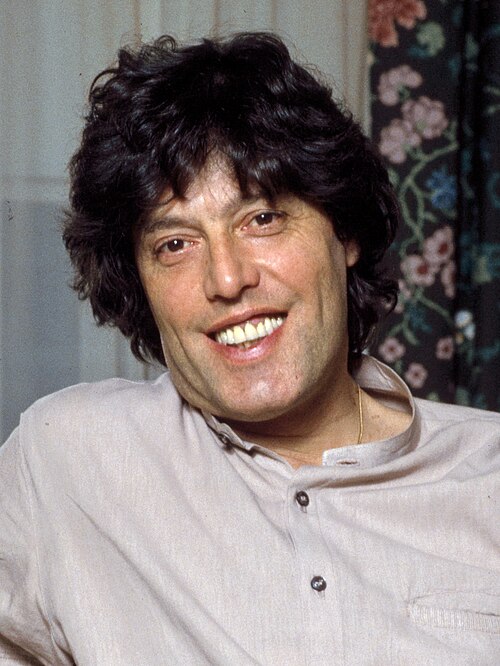
Source: Wikicommons
These days, the figures who have loomed large in our cultural lives seem to be disappearing one by one. On the last weekend of November, I was saddened to learn that the playwright Tom Stoppard had died, aged 88. His work has inspired me throughout my adult life. At the age of about 16 or so, I was a stage hand in a school production of Rosencrantz and Guildenstern are Dead, and was enthralled by its brilliance. Not long afterwards, I went to see Jumpers at the Old Vic, with Michael Hordern as the hapless moral philosopher George and Diana Rigg as his wife Dorothy, a fading star of musical theatre – both actors, alas, now gone. Two years later, in 1974, it was Travesties at the Aldwych, that pyrotechnic jeu d’esprit which brings together James Joyce, Tristan Tzara, Lenin and Krupskaya in energetic debate in Zurich during the First World War.
The stagecraft of Stoppard’s plays was intricate, the timing of entrances and exits resonant and perfectly judged:
ROS: All right, then. I don’t care. I’ve had enough. To tell you the truth, I’m relieved.
(And he disappears from view.)
(GUIL does not notice.)
GUIL: Our names shouted in a certain dawn… a message… a summons… there must have been a moment, at the beginning, where we could have said – no. But somehow we missed it. (He looks round and sees he is alone.)
Rosen – ?
Guil – ?
(He gathers himself.)
Well, we’ll know better next time. Now you see me, now you –
(And disappears.)
The erudite disquisitions on art, literature, history, philosophy and mathematics were dazzling, and represented a life of the mind to which I aspired, while the sense of displacement that haunts the plays struck a chord. When I heard the playwright interviewed, the slight Central European accent, with its soft vowels and gently slurred syllables, reminded me of my father, who spoke with a German accent all his life, and the cultured Russian émigrés for whom my mother worked for many years. Maybe I had, just, a toehold on the coast of Utopia after all.
Born Tomáš Sträussler in Zlín, Czechoslovakia, in 1937, Stoppard was taken by his parents to Singapore to escape the Nazi invasion in 1939. When the Japanese invaded in 1942, the family was forced to flee once again; Tomáš and his mother ended up in Mumbai, while his father, travelling separately, was killed when his ship was sunk by the Japanese. After the war, his mother married a British army officer, Kenneth Stoppard, and the family settled in England.
In the early part of his career, Stoppard was often characterised as a coolly cerebral playwright, unwilling or unable to engage the emotions of his audiences. Although this misconception would be dispelled by the emotional power of later works such as Arcadia (1993) and The Invention of Love (1997), it was never really true. Like a highwire act above the abyss, the virtuosity of Rosencrantz and Guildenstern conveys a whiff of existential terror, while the farcical high jinks of Jumpers tend to obscure the pathos of George’s distress when he accidentally kills the hare and the tortoise he is using to disprove Zeno’s paradox. Like Zerlina’s aria lamenting a lost pin in Mozart’s The Marriage of Figaro, this is the essence of tragicomedy: an understanding that we displace onto minor losses the greater griefs we are unable to express.
In an age of political theatre, Stoppard was also berated for a lack of commitment, but soon found his cause: freedom of speech and the plight of dissidents in the Soviet bloc. Every Good Boy Deserves Favour (1977), a one-act play with music composed and conducted by Stoppard’s friend André Previn and starring Ian McKellen and Ben Kingsley, highlighted the incarceration of Soviet dissidents in mental hospitals. In the TV drama Professional Foul (also 1977), Peter Barkworth played a Cambridge don attending an academic conference in Prague, with a young Stephen Rea as his former student who has fallen foul of the regime. Stoppard joined English PEN, befriended Václav Havel, and reported on the trial of Havel and the other signatories of Charter 77.
Almost 30 years later, he revisited the subject in Rock’n’Roll, imagining how his own life might have played out had his family returned to Czechoslovakia after the war. When we saw the play at the Duke’s Theatre in 2006, shortly after it transferred from the Royal Court, it made a powerful impression. Spanning the years from the Prague Spring of 1968 to the Velvet Revolution in 1989, it juxtaposes the fortunes of a young Czech, Jan, brilliantly played by Rufus Sewell, and his Cambridge tutor, the old Marxist Max (Brian Cox). While Jan is drawn into dissidence through his love of rock music (tracks by Pink Floyd, the Grateful Dead, the Czech band Plastic People of the Universe and the Rolling Stones blasted out between each scene), Max’s political faith gradually crumbles as he loses his wife Eleanor (Sinead Cusack) to cancer.
If there is one strand that runs through Stoppard’s work, it is loss. ‘An air that kills’ blows from ‘the land of lost content’ through The Invention of Love, in which the poet and classical scholar A.E. Housman, waiting for the boatman Charon to ferry him across the river Lethe, looks back ruefully on his unfulfilled love for his friend Moses Jackson. And in Arcadia, which moves between the age of Byron and the present day, the tutor Septimus attempts to console the teenage mathematical genius Thomasina for the lost plays of Aeschylus, Sophocles and Euripides:
You should no more grieve for the rest than for a buckle lost from your first shoe… We shed as we pick up, like travellers who must carry everything in their arms, and what we let fall will be picked up by those behind. The procession is very long and life is very short. We die on the march. But there is nothing outside the march so nothing can be lost to it.
In January 2020, we attended a preview of Leopoldstadt at Wyndham’s Theatre in London, not long before the run was cut short by the first Covid lockdown. The play, in which Stoppard finally explored the Jewish heritage he only discovered in middle age, chronicles the destruction of a liberal, assimilated Viennese family by the Nazis. Entrances and exits – by the final act, set in 1955, only three members of the extended clan are left on stage. Leo, who escaped thanks to his British stepfather, is initially a blithe, cricket-loving Englishman, like the young Tom Stoppard himself. His cousin Nathan, who has survived Auschwitz, rebukes him: ‘You live as if without history, as if you throw no shadow behind you.’ His other surviving cousin Rosa, returned from New York, turns the pages of the family album, reciting the fate of each member: ‘Cancer… Suicide… Auschwitz… Auschwitz… Auschwitz.’
As the curtain came down and the house lights went up, we found the playwright behind us in the back row of the stalls, comforting a distraught woman beside him. And as we left by the side exit, there he was in the alleyway, smoking a cigarette, deep in thought.
Who knows what ideas were yet to emerge from that brilliantly inventive mind?